

In 1998, Indonesia was hit by the severe economic crises which put Indonesian’s economy in poor shape. Indonesian businessmen sunk together with the shrinking economy. Many of them lost their business and most of them should change gear from expansion into survival mode. Even five years after the crises, there is no clear signal of an economic recovery.
A decade have passed, the economy has picked up, mainly supported by the commodity price increase, including CPO, oil, gas, coal, and mineral. This development has made the economic engine to work faster and to create a long list of newly rich Indonesians and old rich Indonesians who getting much richer.
These phenomena has strengthen the belief that Indonesia is a land of opportunity, especially for those who could make a right decision at the right time, who have access to global financial market, and more importantly, for those who has courage and luck.
According to Globe Asia report, 40 richest Indonesians have combined wealth of USD 50 bn, almost twice of the wealth of the 40 richest Malaysian or Singaporean, and three times of the wealth of the 40 richest Thai or Pilipino. At the moment, Aburizal Bakrie, Indonesian richest person with net wealth of USD 9.2 billion, is slightly richer than George Soros.
If we include Mr. Bakrie in the list of 100 world richest people (Forbes Magazine version) George Soros’ ranking will go down to the bottom of the list. It is not a distant reality that in the near future, we will witness several Indonesians in the above mentioned list.
Trickle Down Effect
The trickle down theory, as mentioned by W.H. Locke Anderson, state that people in the lower level of the economic hierarchy benefit from prosperity improvement at higher income levels. Assuming this thought is correct, public policy need to focus on stimulating economic growth since the market mechanism will share out a portion of the wealth created to the poor.
The reason behind the theory is straight forward, when an investment is made, whether to build infrastructure or to open a new business, the first money is spent to hire people to do the work, before the shareholder receive benefit in the form of dividend. When the companies expand, they will recruit more employees. In addition, successful employees will step up the management ladder and left vacant places to fill in.
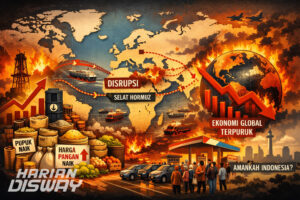
However, it seems that trickle down effect doesn’t work for Indonesia case. Many Indonesians becoming rich due to the increase in commodity price such as oil, natural gas, CPO, coal and mineral; not necessarily the increase in production volume. Maybe, the real economic activity doesn’t expand.
An economic incident always has primary and secondary effect which often time works in paradox. Beside those who feel better off, the price increases also create millions of people who feel worse off due to inflationary pressure, especially those with steady income.
In addition, even though the production volume increases, it will have negligible impact on employment level. Nowadays, resources based industries rely more on heavy equipment rather than on labor. This, combined with the relatively short production chain makes the economic added value minimal.
What’s more, a significant portion of the wealth creation is done through the capital market, riding the wave of the increase in stock market index. Often time, the increase has nothing to do with the real economy, nothing to do with job creation.
Making Trickle Down Effect Works
In many case, trickle down effect could work effectively only with the interference of the government. Public policy should stimulate the trickle down of wealth but without creating disincentive for the economic players to do business.
For the case of Indonesia, the government could encourage natural resources based company to do IPO, to enable public investors to enjoy the wealth been created. Ideally, the government should also increase the minimal level of public shareholder number to enlarge the public investor base, so that more people will enjoy the benefit.
In addition, the government could implement windfall profit tax policy. The critical aspect of such policy is the determination of the tax rate and the floor commodity price at which such tax will be implemented. Overly aggressive windfall profit tax could stimulate tax avoidance through price underreporting. It also could discourage investment in the industry, at a time when this country needs new investment in oil, gas, coal and minerals sector.
The use of windfall profit tax proceed is also a delicate issue. Ideally, the government should create an independent institution to manage the endowment fund. Among several possible use of proceed including to provide affordable education for the people, a very crucial program at the moment, when education, especially higher education, becoming so expensive for most Indonesians; or to provide soft loan for local small enterprises – learning from Grameen Bank success story, to enable them to expand their business and create more job.
Closing
Indonesia is a net producer of a several strategic commodities. Unfortunately, an increase in commodity price is not good news for most Indonesians. The price increase could make their live tougher.
It is the time for the government to interfere, to make “good news” good news, by using public policy to increase the size of the trickle by introducing a mechanism that enable the people at the lower economic hierarchy to benefit from the increase in prosperity of those at the higher income level; in this case, including from those who take advantage from the increase in commodity price.
Wijayanto is a vice rector at Paramadina University. He is also a Fulbright fellow and a former investment banker. He can be reached at [email protected]